KPMG
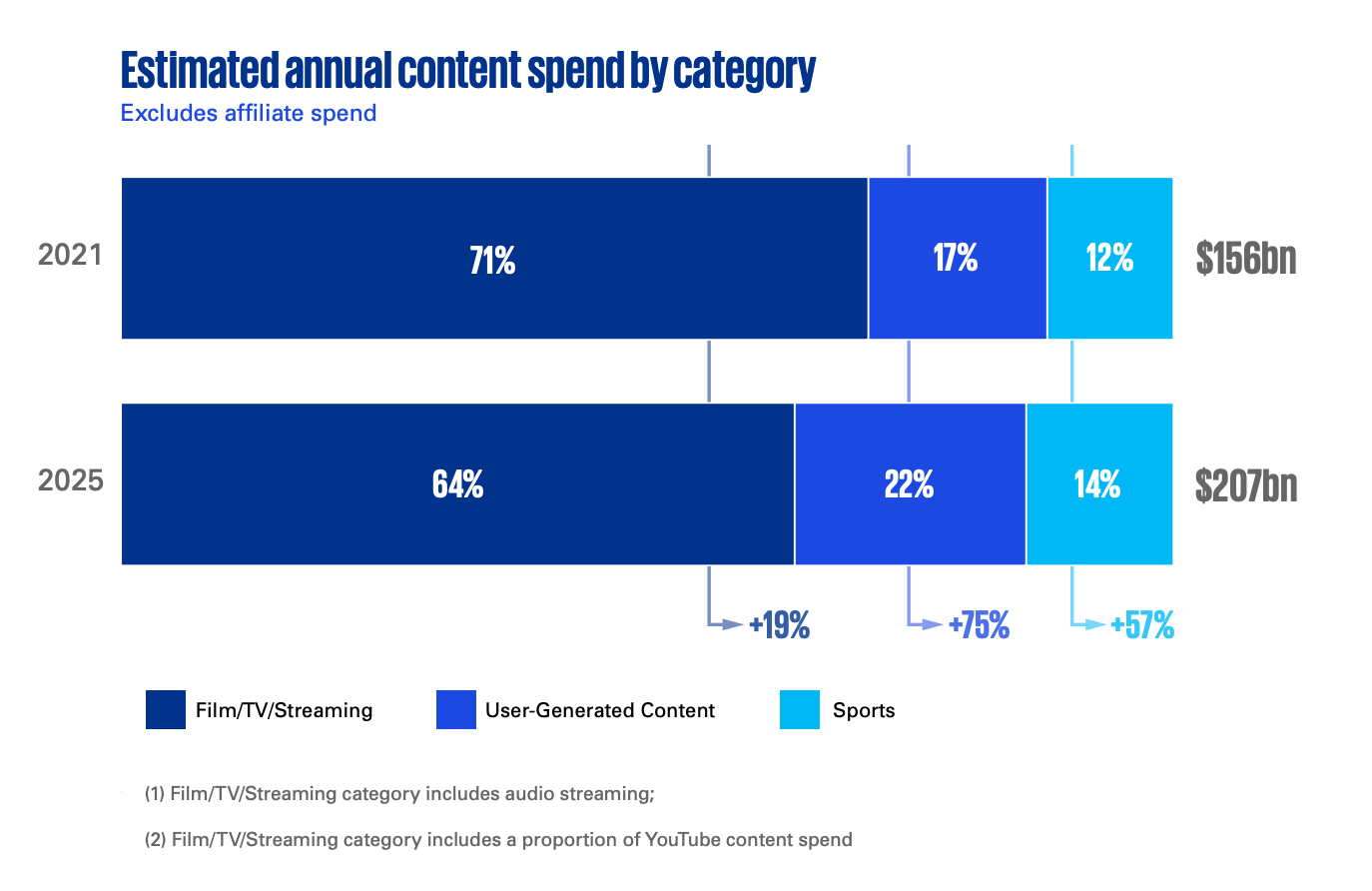
Creator content and sports are taking up a growing share of content spending, according to a new KPMG report. Spending on user-generated content grew 75% between 2021 and 2025, compared to 57% for sports and just 19% for film, TV, and streaming.
As a result, user-generated content and sports accounted for 22% and 14% of content spending in 2025, up from 17% and 12% in 2021. Film, TV, and streaming's share fell from 71% to 64%.
Overall, KPMG estimates that content spending across 13 major media and technology companies, including YouTube, Comcast, Disney, Amazon, Netflix, Meta, and Paramount, reached $207 billion in 2025, up from $156 billion in 2021. YouTube was the biggest spender, at an estimated $28 billion.
Why Creators and Sports Are Attracting More Investment
The findings put numbers behind a trend we've been seeing for several years, with companies investing more heavily in creator content and live sports. Examples include YouTube securing the rights to NFL Sunday Ticket, Netflix securing the rights to video podcasts, and Amazon Prime Video launching MrBeast's Beast Games.
Creator content can be relatively cost-efficient to produce while driving consistent engagement and repeat viewing habits. Creators also bring established audiences that companies can reach and monetize through advertising, subscriptions, and other revenue streams. According to WPP Media, 2025 marked the first year that advertising spending on creator platforms surpassed traditional media.
Sports rights, while often expensive, deliver appointment viewing and some of the few remaining shared cultural moments. That makes them particularly valuable to advertisers looking to reach large, engaged audiences.
YouTube is especially well positioned to benefit from this shift. Unlike traditional media companies that often pay upfront to produce or license content, much of YouTube's creator spending comes through revenue sharing after advertising revenue has been generated. That allows it to scale its content library without taking on the same upfront financial risk, although major sports rights deals are a notable exception.
Creators and sports rights holders both stand to benefit as more money flows into these areas, particularly sports creators who sit at the intersection of both. We're already seeing it with YouTube tapping creators to promote NFL Sunday Ticket and NBCUniversal bringing creators into its Olympics coverage through its Creator Collective. As companies keep investing in sports, creators could become a bigger part of how they attract audiences and extend the value of those rights beyond the live event.
It's All Content
While creator content and sports will likely continue taking a larger share of spending, I think we're moving toward a point where we simply refer to it all as content.
The lines between traditional entertainment, creator content, and sports are already blurring. Creators are building full-scale production studios and developing programming that rivals traditional entertainment. Meanwhile, media companies and platforms are bringing different types of content together, allowing viewers to move from a Hollywood movie to a creator review to a live game within minutes.
Ultimately, viewers don't necessarily care whether something is creator content, traditional entertainment, or sports. They just want content worth watching, and recommendation algorithms are increasingly built around that. The companies competing for their attention are recognizing it, too.