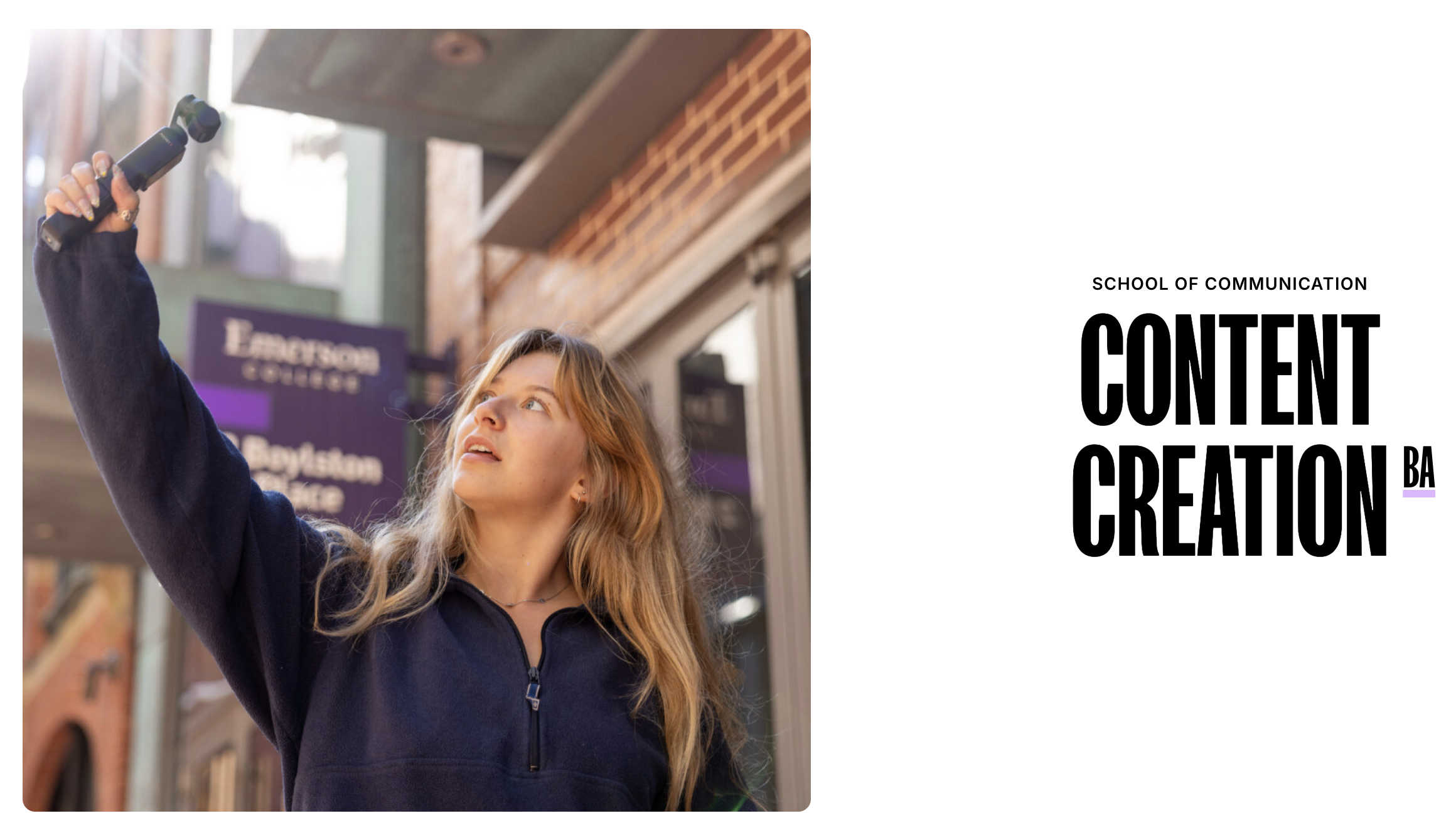
Emerson College is one of the latest institutions to give students a formal pathway into the creator economy.
The Boston-based college announced a new Bachelor of Arts in Content Creation, with enrollment beginning in fall 2027. Housed within its School of Communication, the program will combine storytelling, media production, marketing, business strategy, and entrepreneurship, preparing students for careers ranging from digital creators and social media managers to influencer marketing managers, content strategists, and producers.
Students will take courses covering the foundations of content creation and the creator economy, with three focus areas to guide their electives: Manager, Producer, and Talent. They'll also develop, launch, and present an original content project as part of their capstone.
Why Colleges Are Embracing the Creator Economy
With the number of U.S. high school graduates projected to decline 13% between 2025 and 2041, colleges are looking for new ways to attract students and prepare them for careers they're interested in pursuing.
And with growing interest in careers across the creator economy, from being in front of the camera to working behind the scenes, it makes sense that more colleges are introducing programs like this.
And it's happening quickly. Syracuse University launched its Center for the Creator Economy last year and introduced a Creator Economy minor this fall. Arizona State University offers a bachelor's degree in Content Creation, while Quinnipiac University introduced a minor in Content Creation and Influencing. Online college Campus has also added a Digital Marketing and the Creator Economy concentration to its two-year business degree.
THE VALUE OF THESE PROGRAMS
Of course, there's an argument about whether a degree in the creator economy is necessary, given that many successful creators and industry professionals built their careers without formal education in the field.
Many people will continue to find their way into the creator economy by doing. But structured programs can complement that experience, particularly by helping students understand the business and operational sides of the industry, which are often among the biggest challenges.
That's the opportunity for colleges: to combine formal education with hands-on experiences that students can build on long after graduation.