Pinterest and Amazon Launch Integration Allowing Creators to Link Amazon Storefronts
Lindsey Gamble
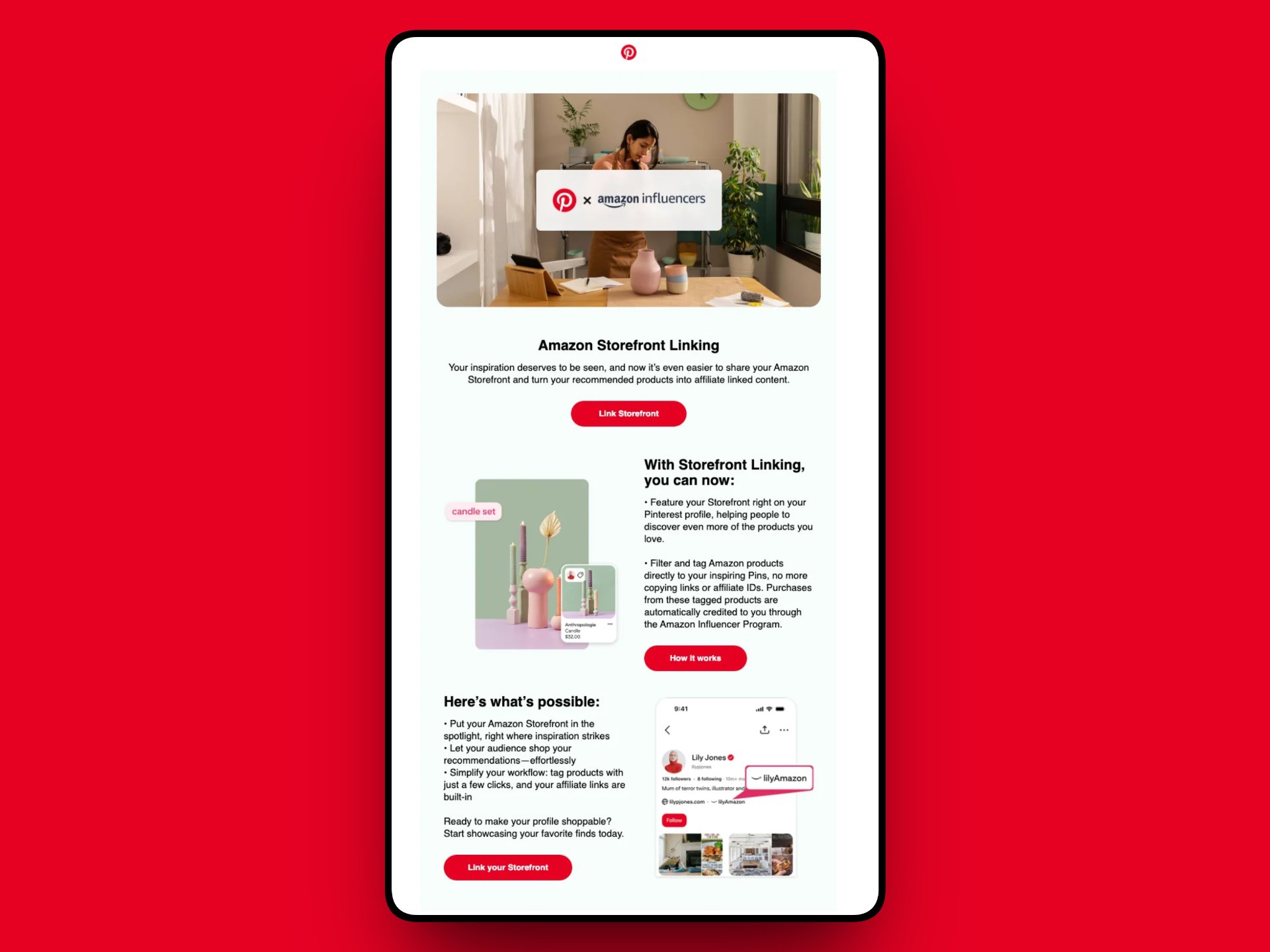
Pinterest and Amazon Influencers have teamed up on a new integration that allows select Pinterest creators to link their Amazon Storefronts directly to their profiles, making it easier to promote products and earn affiliate revenue.
How Pinterest Creators Can Connect Their Amazon Storefront
Creators in the Amazon Influencer Program can connect their accounts by going to Settings, selecting Claim Accounts, choosing Claim Amazon Storefront, and logging into Amazon to grant access.
Once connected, creators can:
Feature a Storefront link on their Pinterest profile
Use an Amazon product filter when tagging products in Pins, with affiliate links applied automatically
Have an automatic affiliate disclosure added to Pins for compliance
More Visibility and a Simplified Workflow for Creators
This integration helps creators expand the visibility of their Amazon Storefronts by prominently featuring them on their profiles and making it easier for shoppers who visit their profile to discover more of their product recommendations.
It also reduces friction by allowing creators to tag Amazon affiliate products directly while creating Pins, without needing to switch between platforms or manually copy links. That not only saves time and effort, but also makes more of their content shoppable, creating additional opportunities to earn commissions on sales they drive.
For Pinterest, this brings the platform closer to its goal of making every surface shoppable. With more shoppable content, users who discover products they like can take action seamlessly. It also gives Pinterest a clearer way to support affiliate marketing, which is becoming an increasingly important revenue stream for creators.
There’s been no indication of this, but if Pinterest were to receive a share of sales from Amazon products linked through this integration, it could create an additional revenue stream for the platform.
When Platforms Collaborate, Creators Often Benefit
This isn’t Pinterest’s first integration with an affiliate platform. In July 2025, it launched an integration with LTK, allowing LTK creators’ content to be distributed as native Pins. Each Pin included the creator’s handle, linked back to the original LTK post, and highlighted relevant products with proper attribution.
On a similar note, at the end of 2024, TikTok tested integrations with third-party affiliate platforms, allowing creators to link products from Amazon, Walmart, Target, LTK, and networks like Impact, CJ Affiliate, and Rakuten. These integrations were later sunsetted, which isn’t surprising given TikTok’s native commerce capabilities through TikTok Shop. In the short term, however, they provided creators promoting affiliate products through other programs a direct, native way to do so on TikTok.
Even so, these experiments show that social media and e-commerce platforms are willing to collaborate under certain circumstances, even as the lines between them continue to blur. When they do, creators often stand to benefit.
Want more insights on the creator economy? Sign up for my newsletter or follow me on LinkedIn, Threads, and Instagram.