Bath & Body Works / Lindsey Gamble
Bath & Body Works is planning to increase influencer activity tenfold as part of its broader brand transformation, the latest signal that major consumer brands are rapidly scaling creator marketing.
During the company's Q4 2025 earnings call, CEO Daniel Heaf shared plans to dramatically expand the company’s use of influencers.
“We are really looking for those thousands of influencers that we recruit to be posting their content about our product and our brand in their voice,” Heaf said.
Bath & Body Works / Lindsey Gamble
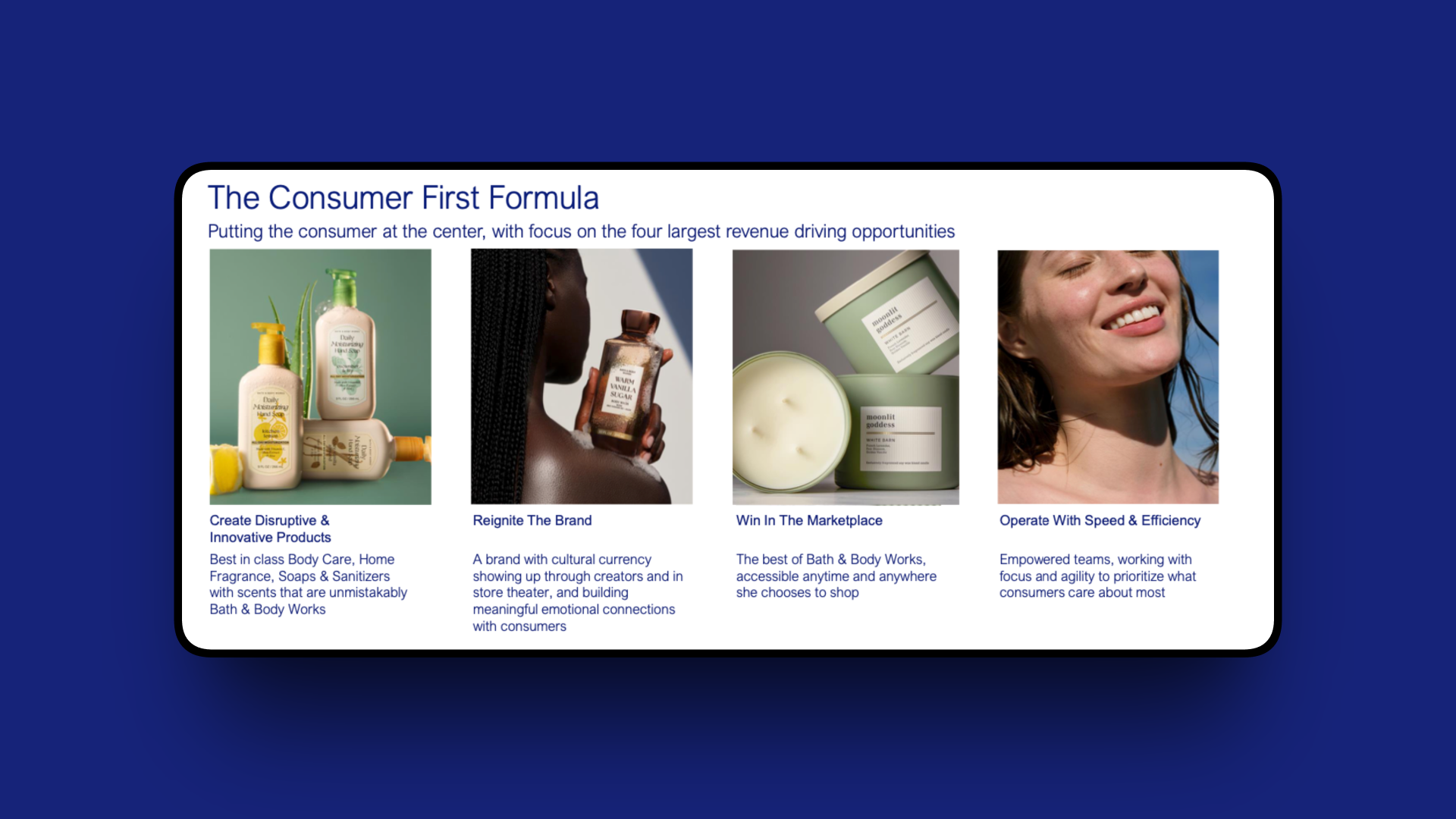
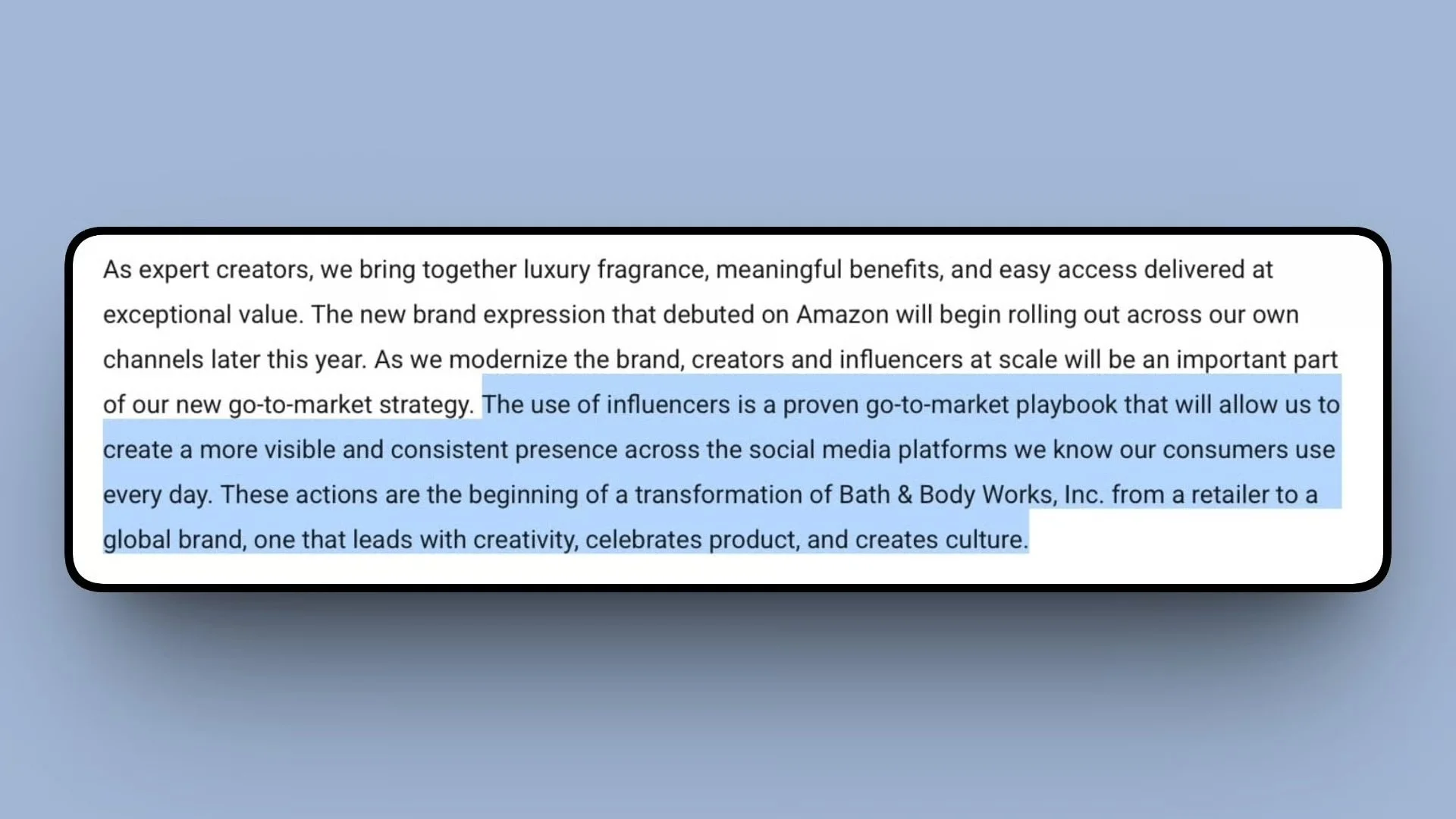
He pointed to the success of this approach among competitors and insurgent brands and sees creators as key to the company’s go-to-market strategy, particularly when it comes to reaching younger audiences such as women ages 25 to 30. He also views creators as a way to modernize the brand’s social presence and show up in ways that feel native and culturally relevant on the platforms consumers already use.
More broadly, Heaf sees creators as part of the company’s evolution from “a retailer to a global brand, one that leads with creativity, celebrates product, and creates culture.”
After Unilever CEO Fernando Fernandez made headlines for planning to work with 20 times more influencers and shift 50% of the company’s advertising budget toward social media and creators, a number of major brands have begun signaling similar moves. Bath & Body Works is the latest.
C-suite support like this is often the key to unlocking meaningful creator marketing budgets. But ultimately, how these investments are executed will determine whether creator marketing approaches the scale and spend of traditional marketing.
For brands looking to work with thousands—or even hundreds of thousands—of creators as Unilever has (over 300,000 in 2025, according to Fernandez), several challenges still need to be solved:
Running programs at scale. From staffing to technology and resources, brands need a unified operating model to coordinate creators, campaigns, and partners.
Deploying creators across the business. Moving beyond sponsored posts, brands need to identify opportunities for creators across organic social, paid media, PDPs, retail media, product development, and more.
Measuring impact. Attribution is complex. Brands need multi-touch measurement that captures not only direct conversions but also halo effects, incremental lift, brand relevance, and broader cultural impact.
Creator marketing is still a relatively small share of most marketing budgets, but moves like this show how quickly that may change.
Want more insights on the creator economy? Sign up for my newsletter or follow me on LinkedIn, Threads, and Instagram.