TikTok Expands Micro-Drama Push With Issa Rae’s HOORAE Partnership
TikTok
TikTok and Issa Rae’s HOORAE announced a partnership to bring exclusive micro-dramas (or what it is more broadly referring to as micro-series) to TikTok and PineDrama, TikTok’s recently launched standalone micro-drama app.
The partnership kicks off this month with Screen Time, which tells the story of a double-date movie night disrupted when someone hijacks the TV and forces a couple to confess their secrets. The two will also co-develop a slate of additional micro-series as part of the deal, with TikTok serving as the primary distribution channel.
Lindsey Gamble
Micro-dramas, ultra-short serialized vertical videos that run one to three minutes per episode and use cliffhangers to drive binge watching, have grown into an over $11 billion market and are expected to reach $20 billion by 2030. They have been especially big in China, where they make up over 80 percent of revenue, and over the past year have gained real traction in the US.
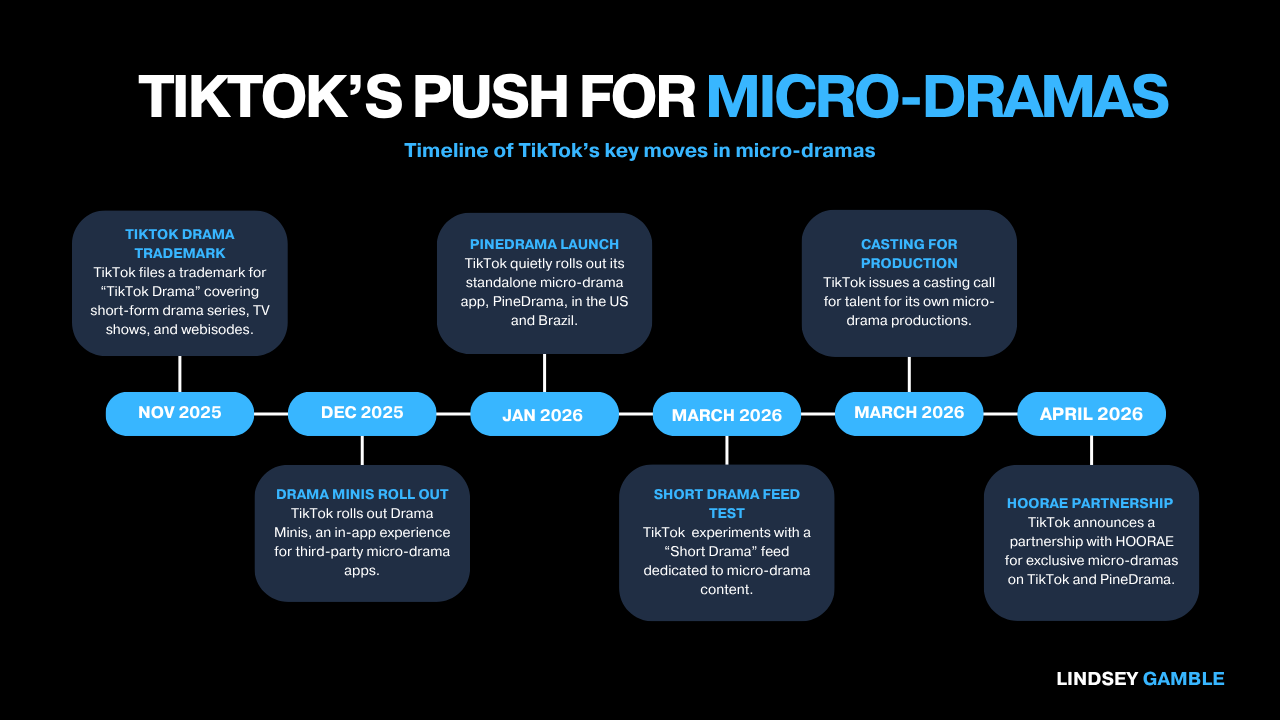
Douyin, TikTok’s Chinese sister app from ByteDance, has long had a heavy presence of micro-dramas, and that influence is clearly flowing upstream. Over the past few months, TikTok has gone deeper into the format, integratingthird-party micro-drama apps, launching PineDrama earlier this year, testing its own dedicated micro-drama feed, and casting talent for original productions. The HOORAE partnership accelerates those efforts while bringing in one of Hollywood’s biggest names in Rae, who is also returning to her digital roots.
TikTok has made the biggest push so far out of social platforms, but that likely will not last long. Instagram launched a micro-drama series in India called Party of Two and is reportedly developing a Short Drama feature. YouTube remains more of an organic distribution channel for now, but the format is spreading fast enough that a more deliberate play feels inevitable.
Micro-dramas fit into the broader shift toward episodic content on social platforms and open a door for creators, not just to produce them, but to star in them. Some traditional actors are passing up micro-drama opportunities, which creates a gap that digital-first creators are well positioned to fill. They are already native to these platforms, already comfortable with short-form storytelling, and already have audiences. Hannah Stocking starring in Playback, a musical micro-drama from production company Second Rodeo set to appear on the app Holywater, is an early example of where this goes.
The risk is that AI gets there first. Micro-dramas are short, structurally simple, and widely positioned as cheap to produce, which makes generating a full series with AI far more viable than doing the same with a feature film. If cost becomes the primary driver, some companies may skip human talent entirely. The same format opening new doors for creators could close them just as fast.
Want more insights on the creator economy? Sign up for my newsletter or follow me on LinkedIn, Threads, and Instagram.