Instagram / Shoppable Content
Most affiliate marketing on social media is a workaround. Link in bio. Swipe up. ManyChat automations. Meta wants to change that with new shopping and affiliate features across Facebook and Instagram.
What's New
On Facebook, the Affiliate Partnerships program lets creators connect accounts from affiliate partners, tag products in posts and Reels, and earn commissions on sales. It launches with Amazon in the US and Shopee across several Southeast Asian markets, with Mercado Libre, Temu, and eBay coming soon.
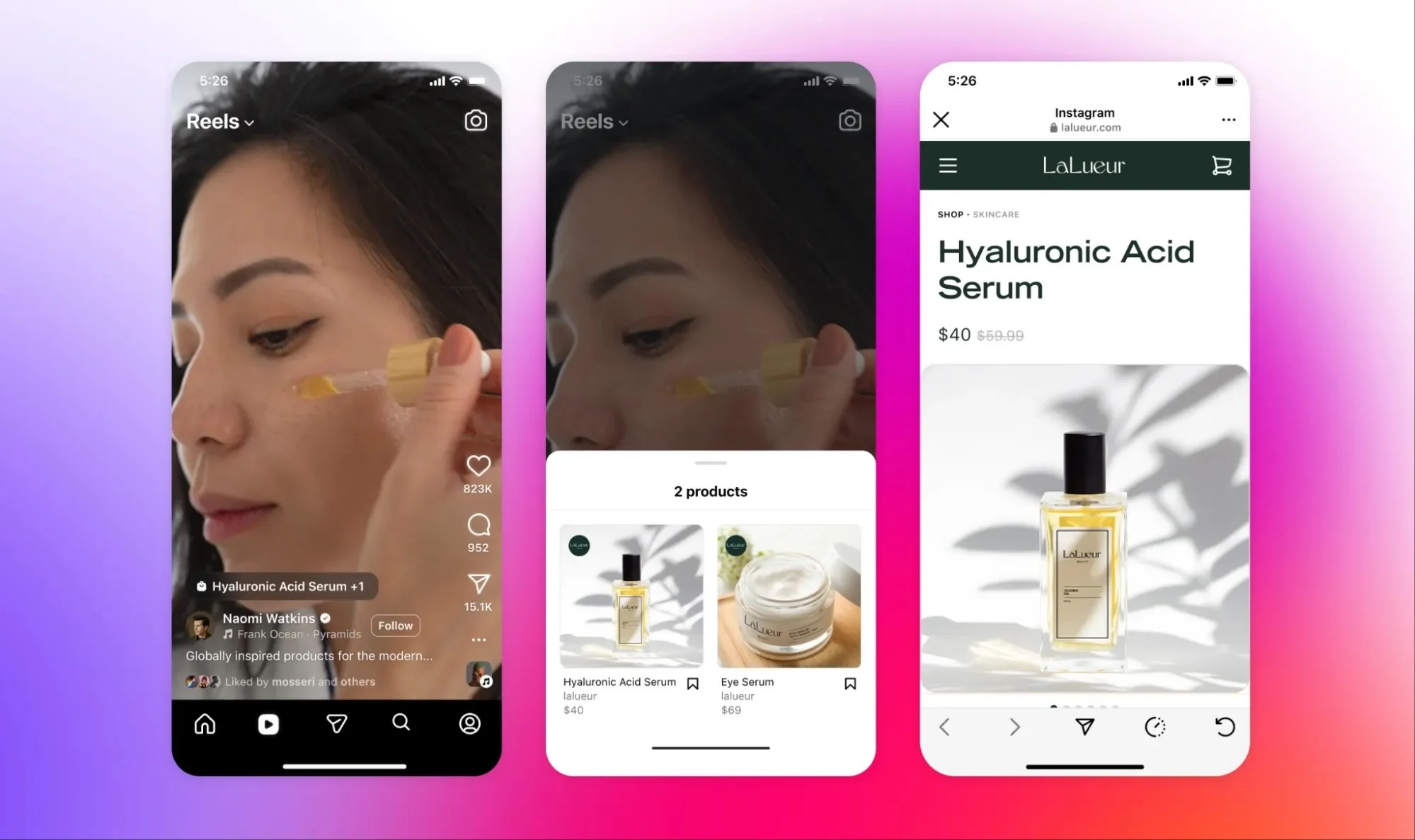
On Instagram, creators will soon be able to make Reels shoppable by selecting product tags from the Meta commerce catalog or adding direct product URLs, including third-party affiliate links. Each Reel can include up to 30 products, and creators can earn commissions.
What It Means for Creators & Meta
These updates give creators, especially smaller ones, more ways to earn beyond brand deals. Native affiliate links cut out the extra steps between content and checkout, which means fewer drop-offs and better conversion on impulse purchases. For Meta, more commerce activity means more data to sharpen ad targeting down the line.
The TikTok Shop comparison is worth addressing directly: these aren't the same thing. TikTok built a closed-loop marketplace, controlling creators, brands, and fulfillment. Meta is acting as a distribution layer, plugging into affiliate programs that already exist. That's actually better for creators, who don't have to join new programs or start from scratch.
This also comes after real backlash over Shop the Look, which surfaced similar products in creator content without giving creators any control or cut of sales. These new tools could eventually be a step toward fixing that.
Investments in Affiliate Marketing Pick Up
Austin Ratner, an affiliate marketing expert who previously worked at Nike, sees a bigger picture in Meta's moves: "This is a win for the broader industry. When a major platform formalizes affiliate tools, it adds credibility to a space that has often been viewed with skepticism, especially in the C-suite."
Meta isn't alone. YouTube lowered its Shopping affiliate program subscriber requirement from 1,000 to 500 this week and launched workSHOPPED, a podcast to help creators navigate its shopping features. Earlier this month, Pinterest added an Amazon integration letting creators link their Amazon Influencer storefront and tag products in Pins directly from Amazon.
Affiliate marketing is one of the most accessible revenue streams for creators, often ranking in the top three, especially early on. Expect platforms to keep investing here, whether through closed ecosystems like TikTok Shop or open integrations like Meta and Pinterest. Platforms are also recognizing that follower count doesn't predict who can actually drive a purchase.
Ratner drives it home: "Follower count is no longer the barometer for how impactful a creator can be. We've seen posts go viral from creators with under 1,000 subscribers, and those moments can have real economic impact."
ICYMI:
Talent Managers Will Help Creators Build & Grow Their Affiliate Businesses
Shopping Is Becoming More About Community & Curation
Want more insights on the creator economy? Sign up for my newsletter or follow me on LinkedIn, Threads, and Instagram.