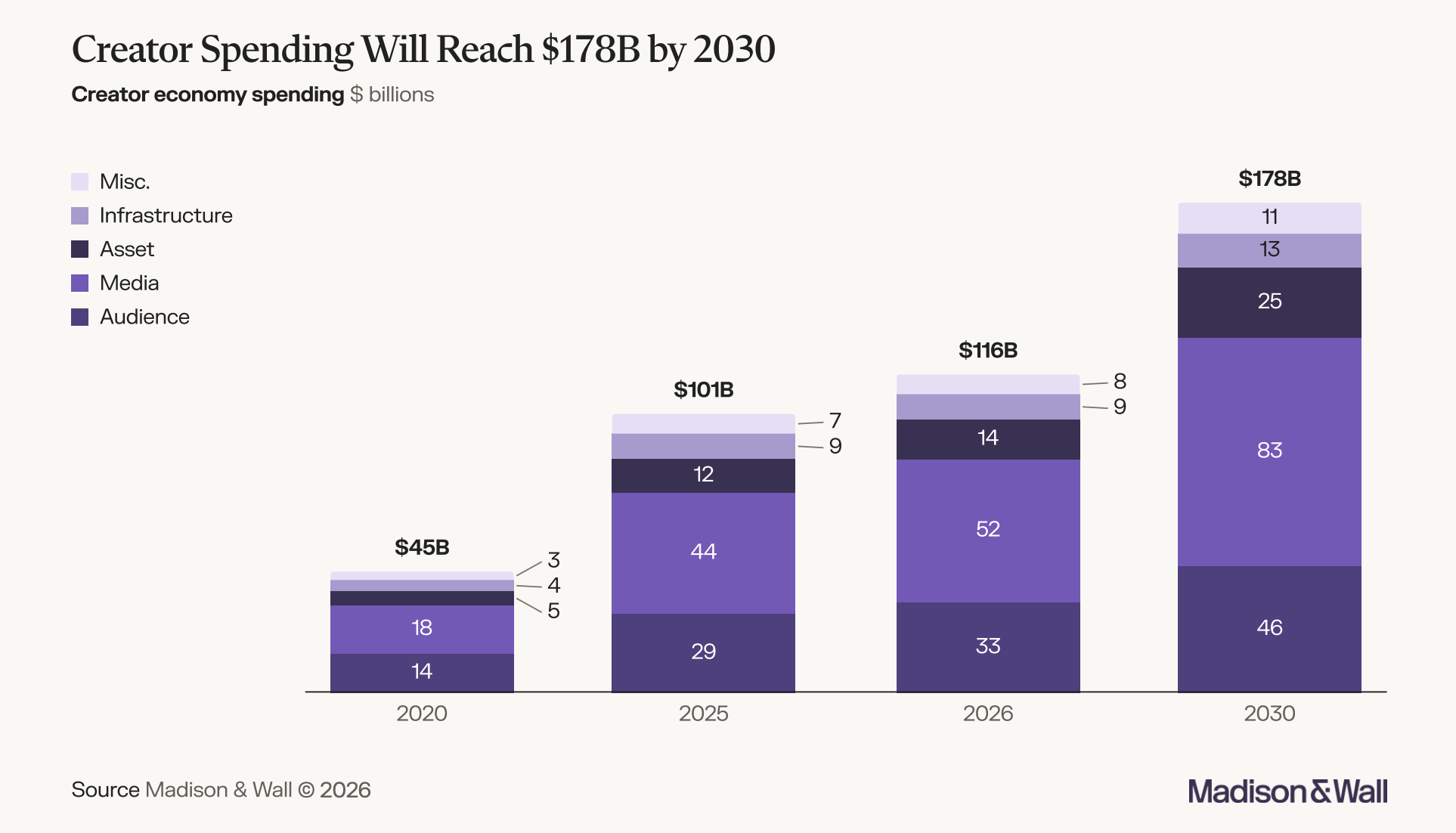
A new report from Madison & Wall shows that 44% of advertiser spending on creator-related activity is media-led, accounting for roughly $52 billion of the $116 billion expected globally in 2026. This includes creator content used in paid social campaigns, paid amplification through creator-ad formats like Meta Partnership Ads and TikTok Spark Ads, advertising through allowlisted creator handles, and creator-led retail media.
Overall advertiser spending on creator-related activity is expected to grow 15% this year, with the market projected to reach $178 billion by 2030.
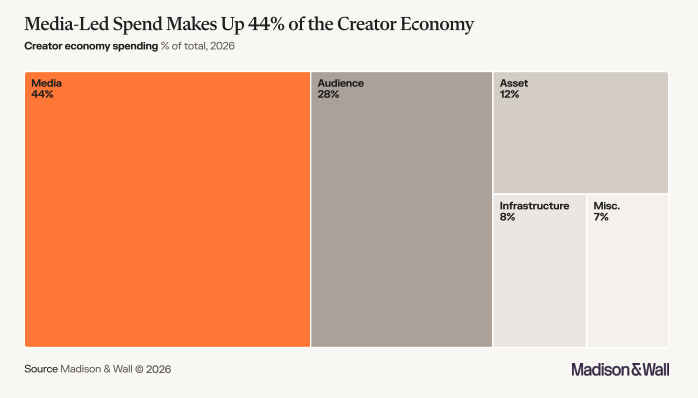
Asset-led spending, where brands work with creators to produce content or secure rights to reuse it across marketing channels, accounts for another 12%, or roughly $14 billion. It's expected to grow 16% annually through 2030, making it the fastest-growing category.
Audience-led spending, where brands pay creators to reach their own audiences through sponsored posts, ambassador programs, and other traditional creator marketing activities, remains the second-largest segment at 28%, although it's growing more slowly.
The remaining spending goes toward infrastructure, including creator platforms and agencies (8%), and miscellaneous activities such as events, gifting, and licensing (7%).
Why Paid Media Is Playing a Bigger Role
If you've been working in the creator economy for a while, the growth in media-led spending shouldn't come as much of a surprise.
I got to experience this firsthand when I moved into an innovation role at Mavrck (now Later) in 2021. One of my first big projects was building out a paid media offering to meet growing demand from clients who wanted to allowlist creator content. A lot of the conversations back then centered on education, establishing processes, and understanding how paid media could add value.
Fast forward to today, and in my strategy and innovation role at IZEA, I'm seeing the focus shift from figuring out how to amplify creator content to how brands can better integrate organic creator content and paid media as part of a holistic marketing strategy.
As more dollars flow into creator marketing, brands are also facing greater expectations around performance and measurement.
Paid media allows brands to scale creator content beyond organic audiences, which is especially important as reach becomes less predictable with interest-based algorithms. It also allows brands to reach specific consumer segments and drive lower-funnel results, an increasing priority in creator marketing.
It also gives brands more flexibility when it comes to selecting creators. Rather than prioritizing follower count and organic reach, brands can focus more on finding creators who are the right fit for their audience and message, while using paid media to provide the scale. This is one reason why nearly half of U.S. creator marketing spending is expected to go toward smaller creators this year.
Why Brands Need More Creator Content
Brands need more content than ever to reach consumers across different platforms and formats. The days of reaching everyone with one commercial have largely passed (with the exception of the Super Bowl ad). Brands have to speak to different communities and do so consistently.
Creators can help meet that demand, often producing content more efficiently and at a lower cost than traditional production methods.
This demand has also fueled the rise of UGC creators, many of whom don't have large followings but produce assets specifically for brands to use across paid media and owned channels.
But perhaps the most important factor is that creator content is what consumers want to engage with.
And it's not just UGC-style videos. More recently, we're seeing brands tap creators to produce highly polished ads that feel like traditional TV commercials while remaining native to social platforms. Examples include Colin & Samir's collaboration with Lexus, Kennedy Eurich's spots for Columbia and Tito’s Vodka, and Alix Earle's Bumble ad. This trend could unlock even more of the budgets traditionally allocated to creative production.
Following the Money
Madison & Wall
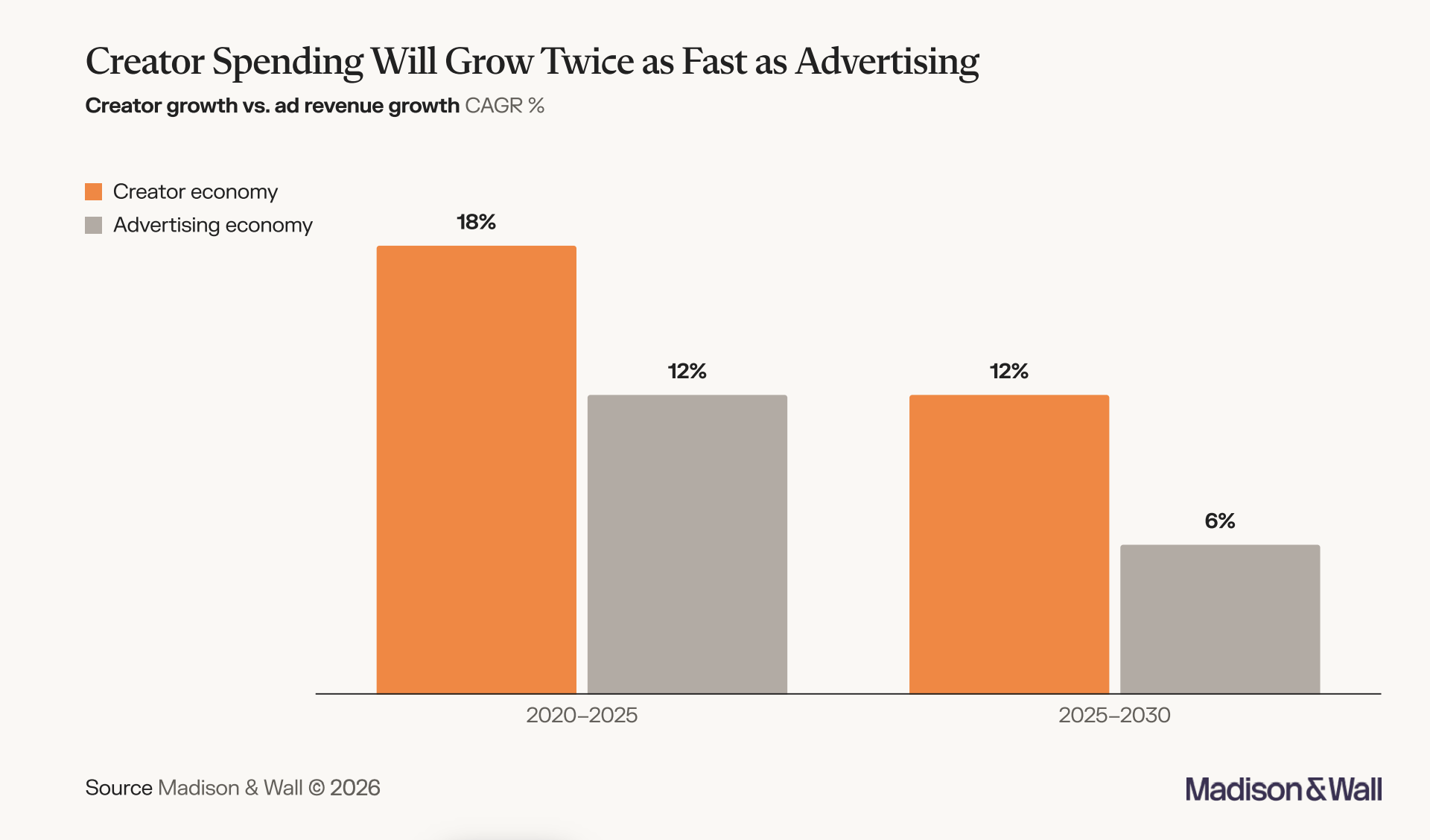
Advertiser-funded creator spending is projected to grow roughly twice as fast as the overall advertising industry through 2030, but much of that growth is coming from existing marketing budgets, including traditional media, digital performance advertising, and creative production.
For creator platforms and agencies, capturing more of this spending means expanding their capabilities and demonstrating how creators can support different parts of a brand's marketing strategy.
For traditional media and creative agencies, staying competitive will increasingly require integrating creators into their existing workflows and offerings, such as partnering with creators on production work they've traditionally handled themselves.
Creators can also position themselves to capture more of these dollars by thinking beyond sponsored posts. They can pitch paid media usage rights, offer additional content assets, and even package their expertise and audience insights to help inform brands' marketing strategies.