From Instagram expanding its affiliate offerings to Facebook and TikTok introducing new incentives to attract creators, it's been another busy week in the creator economy.
Here's a roundup of the latest creator economy news, social media platform updates, and influencer marketing developments, along with what they mean for creators, brands, and marketers.
Instagram Expands Affiliate Offerings With Amazon, LTK, and ShopMy
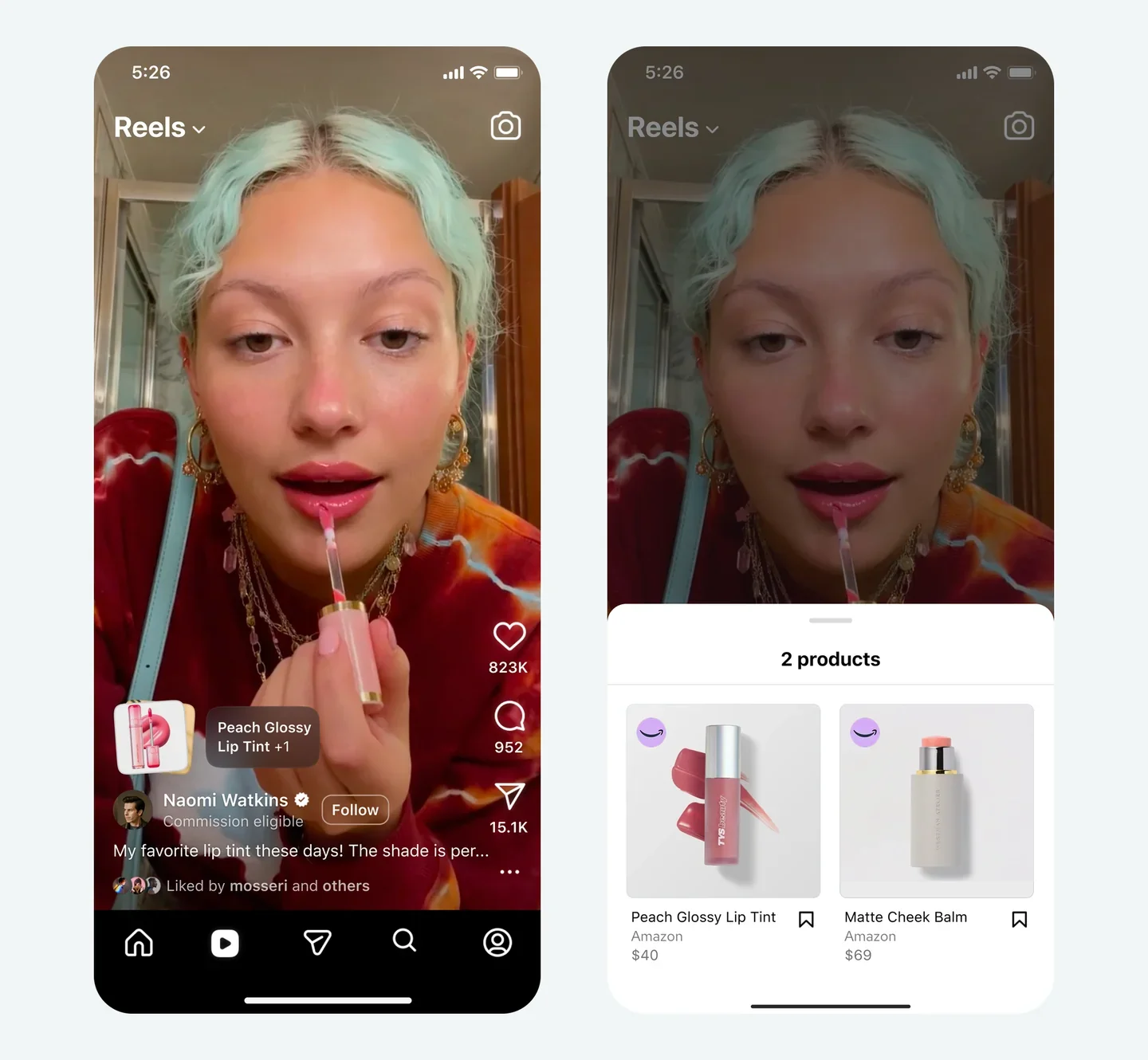
Instagram added Amazon as an affiliate partner, allowing creators to add Amazon affiliate links directly to Reels, carousels, and feed posts. Creators can also link to product collections through LTK and ShopMy.
With product links reportedly generating twice as many clicks as bio links, these integrations could help creators drive more affiliate sales.
Instagram Lets Users Edit Stories After Publishing
Instagram now allows users to edit Stories for up to 15 minutes after publishing, including text, music, stickers, and drawings, without losing existing engagement.
Following the ability to reorder carousels and swap out music in posts, Instagram continues to give users more control over content after publishing.
Facebook Brings More Creator Tools to Its Creator Dashboard
Facebook has brought creator tools from Meta Business Suite into its Creator Dashboard on the web, including publishing, scheduling, a content library, insights, and an inbox.
The update streamlines creators' workflows by reducing the need to switch between tools.
Facebook Expands Creator Fast Track to College Creators
Facebook expanded its Creator Fast Track program to U.S. college creators.
Through Creator Fast Track College Edition, those with at least 1,000 followers on Instagram, YouTube, or TikTok can apply for increased Reels reach and immediate access to monetization.
Creators with at least 20,000 followers can qualify for three months of guaranteed payments ranging from $100 to $3,000 per month, depending on follower count.
Recruiting college creators could help Facebook attract younger audiences while building relationships with emerging talent.
Meta Brings Content Protection to Instagram Creators
Meta is rolling out Content Protection for Instagram creators, which scans Instagram and Facebook for videos matching those of enrolled creators. Creators can track matching videos' performance, hide them, add a credit link, or take no action.
Alongside its efforts to reward original content, Meta is giving creators more control over how their work is used.
Meta Tests Direct, a Standalone Messaging App
Meta is testing Direct, a standalone messaging app for individual and group chats that can be used with or without an Instagram account. It includes customizable themes, Notes, stickers, and more.
The app taps into existing behavior, particularly among younger users who increasingly socialize through private messaging.
TikTok Introduces Likeness Detection for Creators
TikTok is rolling out Likeness Detection, an opt-in tool that helps eligible creators and public figures identify and report AI-generated content using their likeness without consent.
Similar to YouTube's efforts, the tool gives creators a way to protect their identities as AI-generated deepfakes become more prevalent.
TikTok Courts YouTube Creators With Exclusive Benefits
TikTok is rewarding creators who link their YouTube accounts to their TikTok profiles with exclusive benefits.
Creators with at least 10,000 YouTube subscribers and 1,000 TikTok followers can access content similarity detection, early access to the Creator Rewards Program, and priority customer support.
It's another example of platforms using incentives to attract established talent from competing platforms.
YouTube Adds TV Co-Viewing to Public View Counts
YouTube is now including co-views, which estimate how many people watch together on the same TV, in public view counts for long-form videos, Shorts, and live streams.
With more than 1 billion hours of YouTube watched on TVs daily, the update brings its measurement closer to traditional TV standards and helps creators better demonstrate their reach to brands.
LinkedIn Rolls Out Digital Business Cards
LinkedIn rolled out digital Business Cards to all users. Cards can be customized with different layouts, fonts, colors, backgrounds, and stickers, shared directly from profiles, and added to digital wallets.
The feature helps bridge online and offline networking, making it easier to turn in-person interactions into LinkedIn connections.
Pinterest Introduces Its First Creators to Watch List
Pinterest introduced its inaugural class of 20 Creators to Watch for 2027 ahead of Pinterest Predicts, highlighting talent across fashion, beauty, home, and more.
The initiative gives native talent more visibility while providing brands with a starting point for creator partnerships on the platform.
Snapchat Expands Its Creator Marketing and Advertising Solutions
Snapchat expanded its creator marketing solutions, moving its AI-powered Snap Creator Network into open beta, enabling creator discovery by campaign goal, audience, and category.
It also rolled out Visited By globally for creator-led business discovery on Snap Map and introduced a Creator Agency Partner Program.
These updates give Snapchat a more direct role in creator marketing, a growing driver of advertising revenue for social platforms.
Apple Brings Video Podcasts to the Apple TV App
Apple is bringing video podcasts to the Apple TV app, where they will be free to watch without a subscription. The move comes as the number of shows publishing video on Apple Podcasts has more than doubled in three months.
Apple has been slower to embrace video podcasts than competitors, but it's accelerating its efforts, expanding its content library while giving podcasters another distribution channel.
Stay on Top of the Creator Economy
Want to keep up with what's happening across the creator economy?
Subscribe to my free weekly newsletter for the latest creator economy news, platform updates, trends, and original analysis on what it all means for creators, brands, and marketers.