Facebook Launches Creator Fast Track Monetization Program With Guaranteed Payments
Facebook announcedCreator Fast Track, a new program aimed at bringing established creators from Instagram, TikTok, and YouTube onto the platform.
I had the opportunity to join a media briefing in advance of the announcement, where Yair Livne, VP of Product Management for Facebook Creators at Meta, broke down the new program and revealed what Facebook paid out to creators in 2025, among other updates.
I also had the chance to ask Livne a few questions, which I added at the end as a bonus, including what types of creators will most likely benefit from building a presence on Facebook, his top three tips for creators getting started, and more.
Let's dive in, and look out for another email later this week with more creator economy news, trends, and insights.
How Creator Fast Track Works
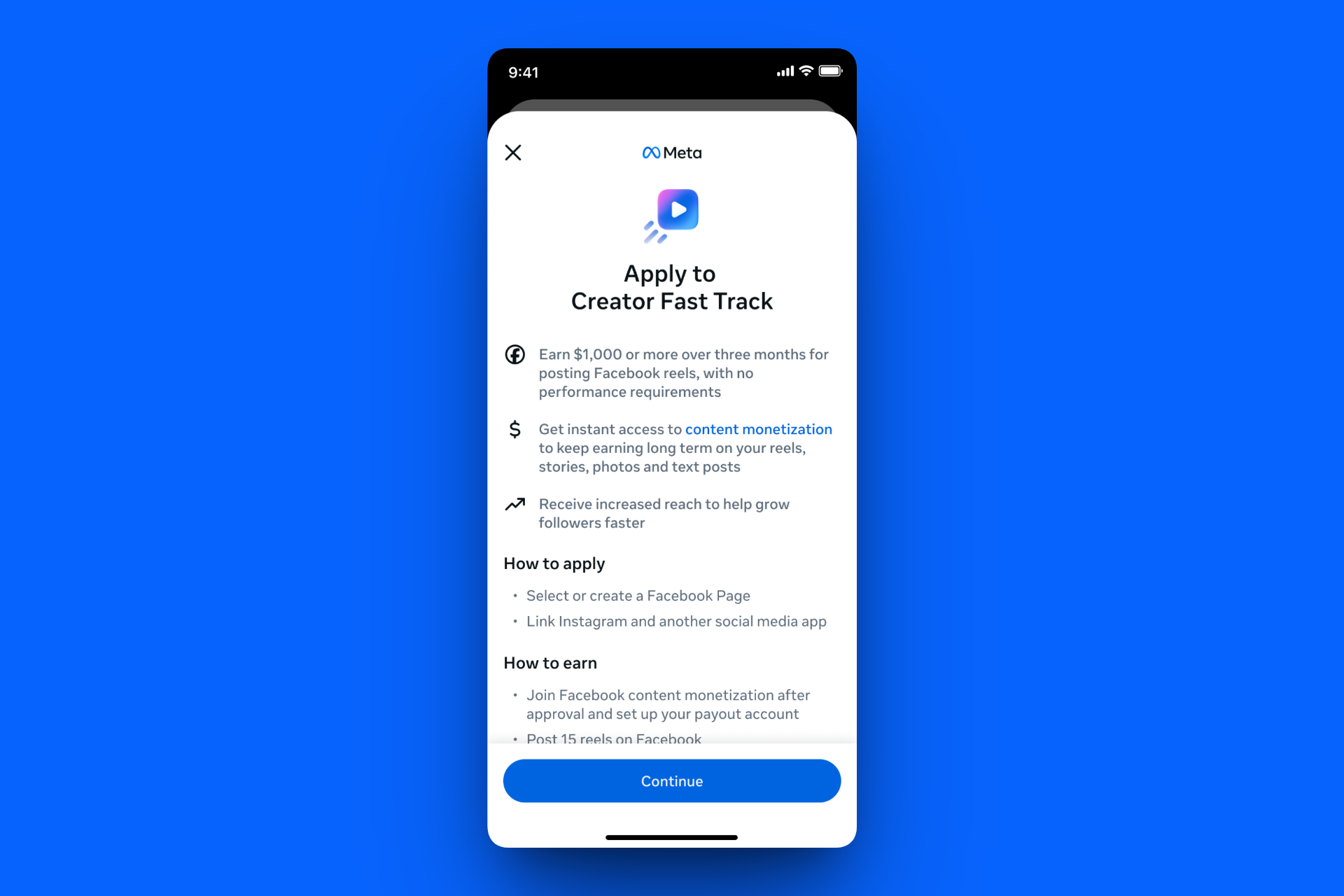
With Creator Fast Track, creators in the program will get increased reach on eligible Reels to accelerate their follower growth and three months of guaranteed payments for sharing eligible Reels on Facebook.
Creators with 100,000+ followers on Instagram, TikTok, or YouTube can earn up to $1,000 per month, while creators with over one million followers on one of those platforms can earn up to $3,000 per month.
They will also get immediate access to Facebook Content Monetization, where they can continue to earn money for their eligible content, including Stories, photos, and posts, after the Creator Fast Track program ends.
"They are worried about the cold start problem. They know that Facebook is a different kind of platform. We are less video heavy, more diverse on content formats, different audience sometimes. And so we wanted to be able to address creators' concerns that it would be a hard road to onboard onto Facebook and build a community from scratch," Livne said, noting the program was built directly around feedback from creators hesitant to make the jump to Facebook.
Why it Makes Sense for Creators & Facebook
That is exactly the appeal of the new program. Facebook has made several efforts to attract creators in recent years, including initiatives around new features, tools, monetization, and prioritizing creators who deliver original content.
At the beginning of 2025, during peak TikTok ban drama, it launched a similar program called the Breakthrough Bonus Program, which courted TikTok creators with bonus payouts, access to Meta Verified, and more to help them get started on Facebook.
This new program feels like a more refined version, with clearer incentives and a stronger long-term monetization hook. Through increased reach and guaranteed payouts, Facebook is lowering the friction for creators to invest in the platform, whether they have no presence at all or have been underutilizing it.
While guaranteed payments might not mean much for bigger creators, they can add incremental value since creators do not need to post exclusive content and can tap into their existing back catalog. More importantly, the real value likely ends up being access to the Facebook Creator Monetization program, where creators can earn even more. Increased reach on content could create a flywheel, helping creators see success on Facebook and continue posting.
This benefits Facebook too. Getting more established creators on the platform can bring more engaging content, keeping users’ attention and its ad business strong. Creators joining also adds social proof, something we saw during the early growth days of TikTok when many Vine and Instagram creators jumped over after seeing peers do so.
Facebook Paid Creators Nearly $3 Billion in 2025
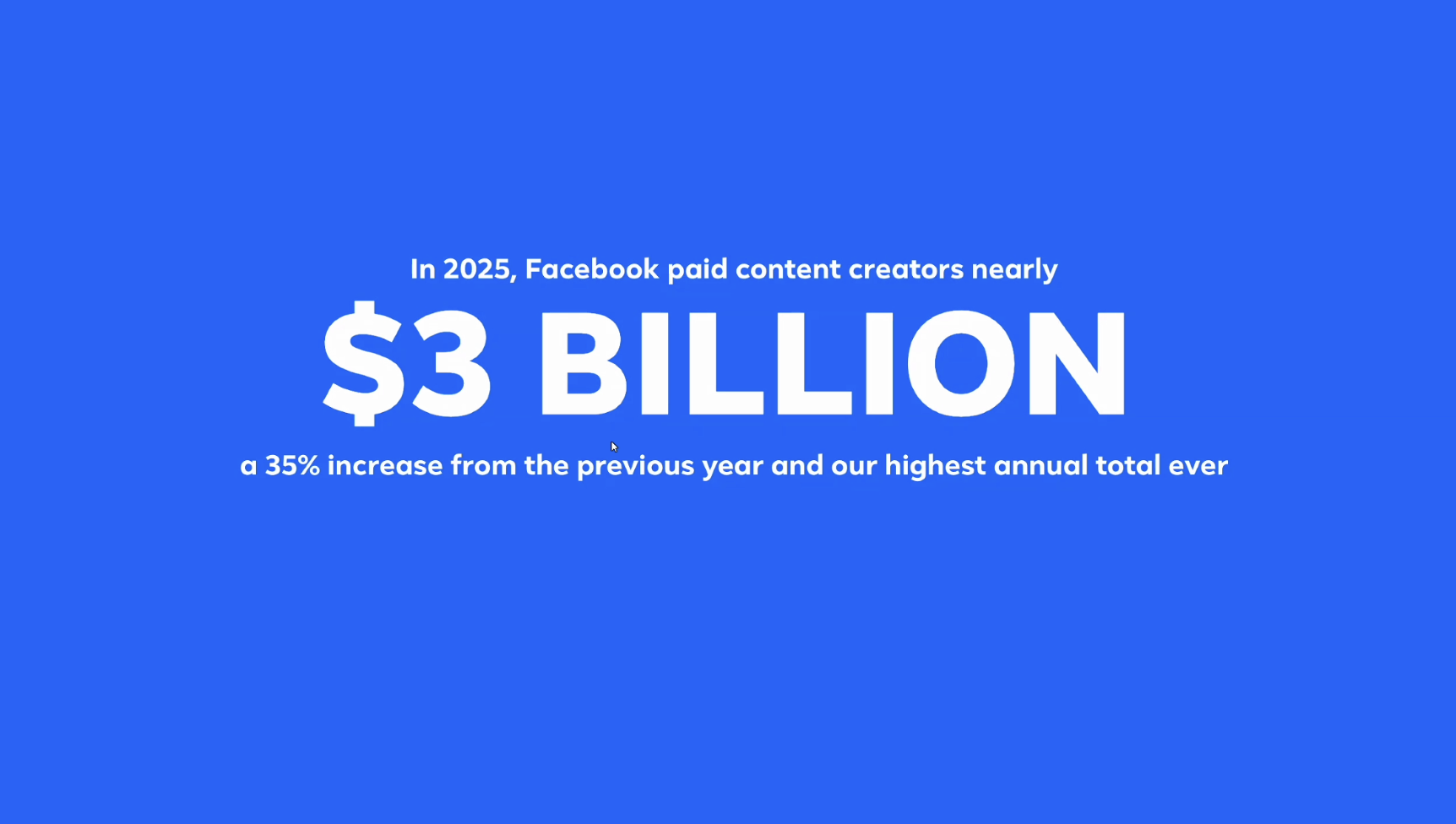
Facebook's creator monetization efforts are making progress. In addition to the new program, it revealed that it paid creators nearly $3 billion in 2025, a 35 percent increase from the prior year and its highest annual total ever. That might seem small compared to YouTube, which has paid out $100 billion to creators, artists, and media partners over the past four years, but Facebook has a different monetization model and is moving in the right direction.
Sixty percent of payments in 2025 went to creators for Reels, with the remainder for Stories, photo posts, and text posts.
Most social platforms tie monetization almost exclusively to video, but Facebook allows creators to earn across formats. That includes those who have not jumped on the short-form video wave, as well as video creators looking for lower-lift opportunities to earn from photo and text posts between video uploads.
That optionality likely explains why the number of creators earning more than $10,000 annually has grown 30 percent year over year. Payouts are not concentrated at the top, with long-tail and side-hustle creators benefiting as well. That is encouraging, given how many people are creators today and want to make some money from it.
Know What You're Earning and Why
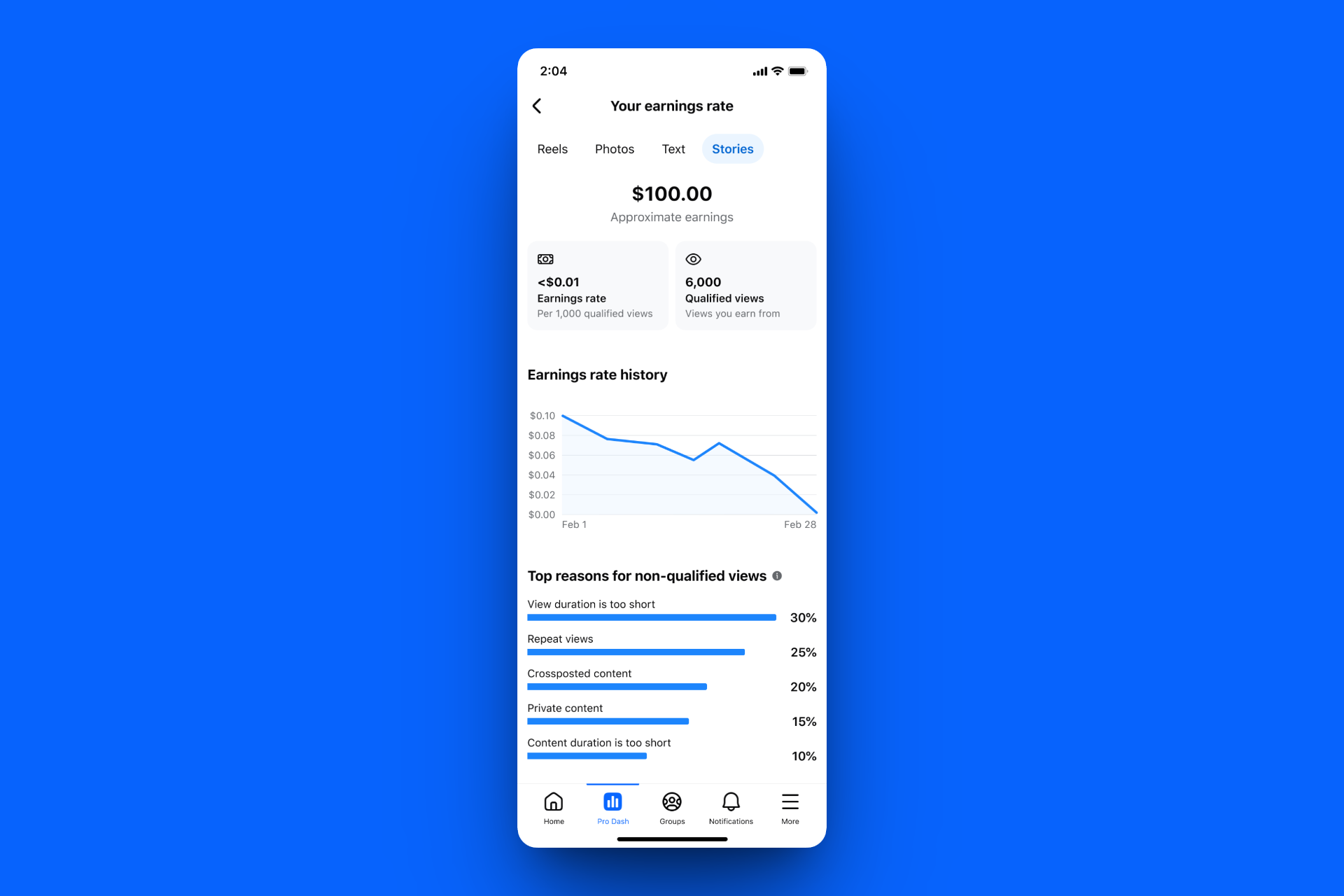
With growing payouts, Facebook is giving creators more visibility with three new metrics, some of which mirror YouTube:
Qualified Views: views on content eligible for monetization
Earnings Rate: earnings per 1,000 qualified views
Non-Qualified Views: breakdown of why some views are not generating revenue
These insights help creators maximize monetization. If a big chunk of views are Non-Qualified because people aren’t watching long enough, that’s a sign to improve hooks. And if cross-posted content is over-indexing, it’s a cue to lean more into original content.
Facebook's Long Game With Creators
Will Facebook ever become the first platform most creators think of for building an audience, monetizing content, and building a sustainable business? For some, maybe, but for Facebook, that might not be the goal. It may be more about taking up a bigger place in the conversation and becoming a meaningful part of a creator's overall strategy rather than the center of it.
Programs like Creator Fast Track can grab headlines and attract creators, but the longer game goes beyond that. Facebook has spent several years doing a little bit of everything: creating more awareness of how creators succeed, updating product experiences to feel more in line with other platforms, providing safeguards for creators and their content, getting in front of bigger, relevant audiences, and helping them make money from fans, brands, or Facebook itself. Expect more updates as the year progresses.
Q&A with Yair Livne, VP of Product Management for Facebook Creators at Meta
This interview has been lightly edited for length and clarity.
LG: What do you think is still the biggest barrier preventing creators from investing in Facebook? Is it awareness around monetization and reach, or something else?
YL: I think you touched on it. A lot of it is about the potential being a bit of a secret. This is something we are trying to address with Fast Track. We want to reach creators who are on the sidelines, or maybe were active three years ago but are not now, and bring them back. The goal is to make it really easy for them to see the value through added support, immediate access, and monetization. There is a perception problem where we need to be louder. Right now, we are working to put our best foot forward for established creators.
LG: Creators can be sensitive about bonus programs. Those are not really sustainable, right? How have creators reacted to the performance structure of this initiative?
YL: There is a lot of sensitivity around bonus programs that come and go, and that is not a sustainable model. That is why the main headline for the us is the almost $3 billion number. We are growing this program responsibly, with the goal of supporting as many creators as possible so they can sustain themselves on Facebook. Early on, creators told us that the bonus should not be the main focus. It is about the long-term potential from content monetization. Ideally, within a few months, creators can start seeing real money and continue to invest. The bonus is really just to make creators feel safe during the initial phase. It is a hand-holding approach, a sweetener, and consistent with what we heard from creators as we built this program.
LG: I imagine all creators can benefit, but is there a certain type of creator, like long tail or more established, who sees more success? Any insights on verticals or types?
YL: We often get asked what creator Facebook is for. The answer is that we are a platform with over 3 billion monthly users worldwide, across a wide range of demographics, ages, and geographies. Ideally, we want all creators to succeed here, and that is how we are designing our monetization program.
In practice, there are a few differentiators. The multi-format approach opens the door for creators who want to show different sides of their personality. On TikTok, creators may focus on short form video, but on Facebook they can connect through video, photo, and text. Videos can be more polished, photos can show day to day life, and text posts can drive back and forth conversations. Those conversations help creators understand what their audience wants, which can inform their content strategy across platforms, including TikTok and YouTube.
Stories allow creators to be more vulnerable and less polished, which supports more authentic interaction. Creators who lean into that tend to see success. Our users also use real names, which creates more genuine interactions and less snark.
In terms of verticals, there is no single category that stands out. Facebook supports niches well. For example, Katie Von Slyke, a farming creator in Tennessee, has found strong success with live videos of baby horses being born. We are also seeing success across comedy, parenting, and relationships.
LG: Text posts are interesting. There are not many ways to monetize them outside of something like a newsletter, but they are easy to create. What is the reaction from creators when it comes to monetizing text content?
YL: Creators are often surprised. We could probably do a better job communicating that. When it works, they understand why. Text posts drive a lot of engagement in the comments, and audiences feel closer to the creator through those more raw and less polished interactions. It complements a broader content strategy very well. We do not see many creators doing text only, but as an add on, it can perform well and generate meaningful earnings.
LG: For anyone starting on Facebook, whether new to the platform or coming from another platform, what are three tips for getting started? A mini playbook for investing more as a creator.
YL: First, Fast Track is for established creators with 100,000 followers or more. It is turnkey and helps you get started quickly. More broadly, consistency is key. Creators who focus on a defined vertical, build their craft, and engage their audience tend to do well. Audience feedback is important and will help guide your strategy.
Second, focus on original content. Original videos are performing very well on Facebook. If you are reposting someone else's content without adding value, you will not see the same level of performance. That does not mean you cannot have fun or post memes, but most of what you share should be your own.
Third, lean into the multi-format approach. Using video, photos, text, and stories allows audiences to see more of who you are. That leads to more authentic relationships with fans and stronger growth over time.
Want more insights on the creator economy? Sign up for my newsletter or follow me on LinkedIn, Threads, and Instagram.